

One of the best improvements to the new AP exam is the inclusion of a vocabulary list based on the most frequently occurring vocabulary in the required Vergil and Pliny texts. The complete is located in Appendix B of the AP Latin CED (Curriculum and Exam Description).
The reason I love this new list is that it aligns closely with my own teaching practices, as for years I’ve based my “untextbooked” classroom on Dickenson College’s Latin Vocabulary Frequency list (as well as Williamson’s Latin Vocabulary List). One of the most striking sentences in the entire AP Latin CED appears immediately before the presentation of the list:
“All Latin words outside this list will be glossed on the AP Exam, except (1) proper names found in the essential knowledge statements, when they occur in the nominative, and (2) on the Project Passage Short Essay free-response questions.”
(AP Latin CED, p. 276)
According to this, students and teachers now have a finite and explicit (though admittedly hefty) vocabulary list to work through to prepare for the test.
This past Spring, Patrick Yaggy was kind enough to share the AP Latin Required Vocabulary List in Google Sheets format; this made sorting, searching, and compiling vocabulary lists much easier.
However, one thing was missing.
On the test, the students will be expected to know the required vocabulary and non-required vocabulary will be glossed. Since I wanted to be able to prepare activities and assessments that reflected the actual AP test experience, I also needed a list of words that don’t appear on the list so that I could gloss them.
So, using the Required Latin Vocabulary document as well as Haverford College’s The Bridge, I compiled this Pliny Required Vocabulary List.
NOTA BENE: Be sure to make a copy of the Google Sheet after you open it to get full functionality!
My list divides the vocabulary by letter (following the arrangement of my Pliny tiered reader) and is sortable by both required and non-required vocabulary words.
Let’s take a closer look:

The main information the list includes is: Latin word, short definition, part of speech, classification (either “AP” or “non-AP”), as well as a “combined” column, which contains the Latin word and short definition combined into one cell, so you can simply filter a list and cut/paste the results into another doc.
So if I’m preparing an assessment on Letter 1 (Pliny Ep. 6.4), I can pull up the list for that letter:

Next, filter for AP or non-AP vocabulary
1) Add a filter to the “CLASS” Column.
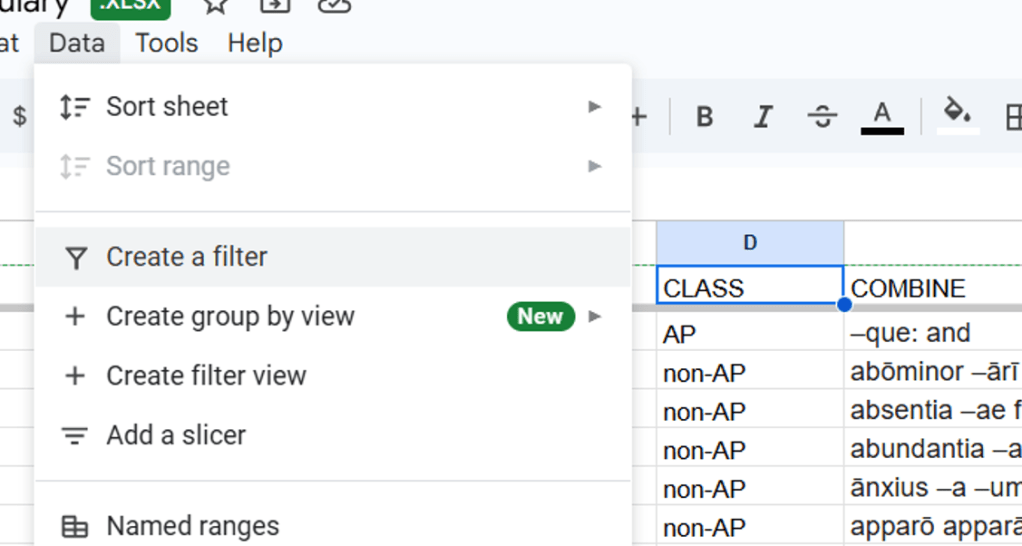
2) Filter for “AP” or “non-AP”

Finally, after I have filtered out the list I want, I just cut and paste the vocabulary into the assessment or activity or whatever I’m making.
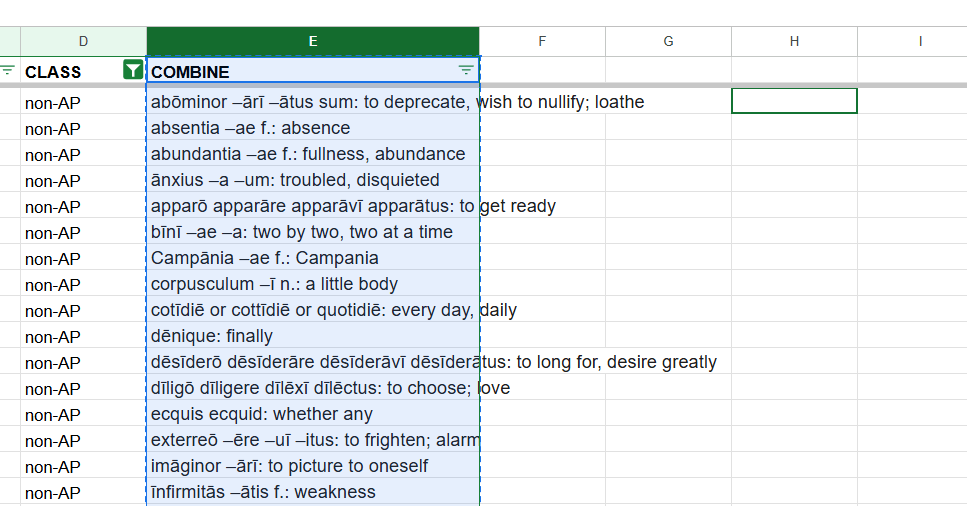
I’m working on the same type of project for the Vergil passages on the AP required reading list; I should have those posted in the AP Resources page soon.
You can find my “Pliny Letter-by-Letter AP Vocabulary List” here.
You can purchase the tiered Latin reader Darkness Over Pompeii: Selections from Pliny the Younger’s Letters here.
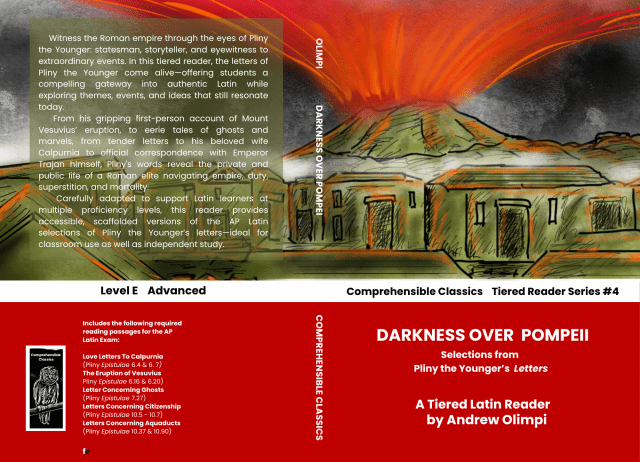
 Comprehensible Classics